Gambling is a “Your money or your life” topic for Google: content about money is judged by who wrote it and how they know. Google calls it E-E-A-T, for experience, expertise, authoritativeness and trust. A casino review signed by nobody and never updated loses to one that names a tester, a fact-checker and the date of the last check. Revio shows all of it without plugins.
See an author page in the demo Buy Revio from $100
Three places where it shows
Under the title of a casino, bonus or article: “Review by”, “Fact-checked by”, “Updated” and a “How we test” link to your methodology page.

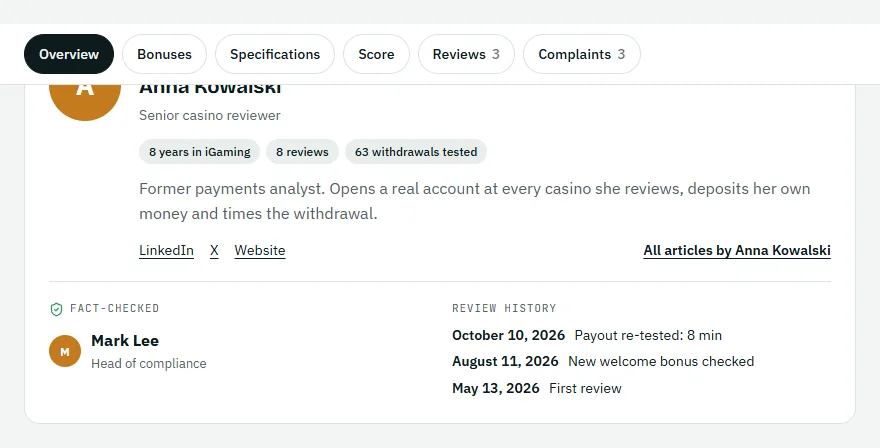
At the end of the review: the author card with the photo, job title, years in the industry, the number of reviews and tested withdrawals, the bio and links, plus the editor who checked the facts and the review history.
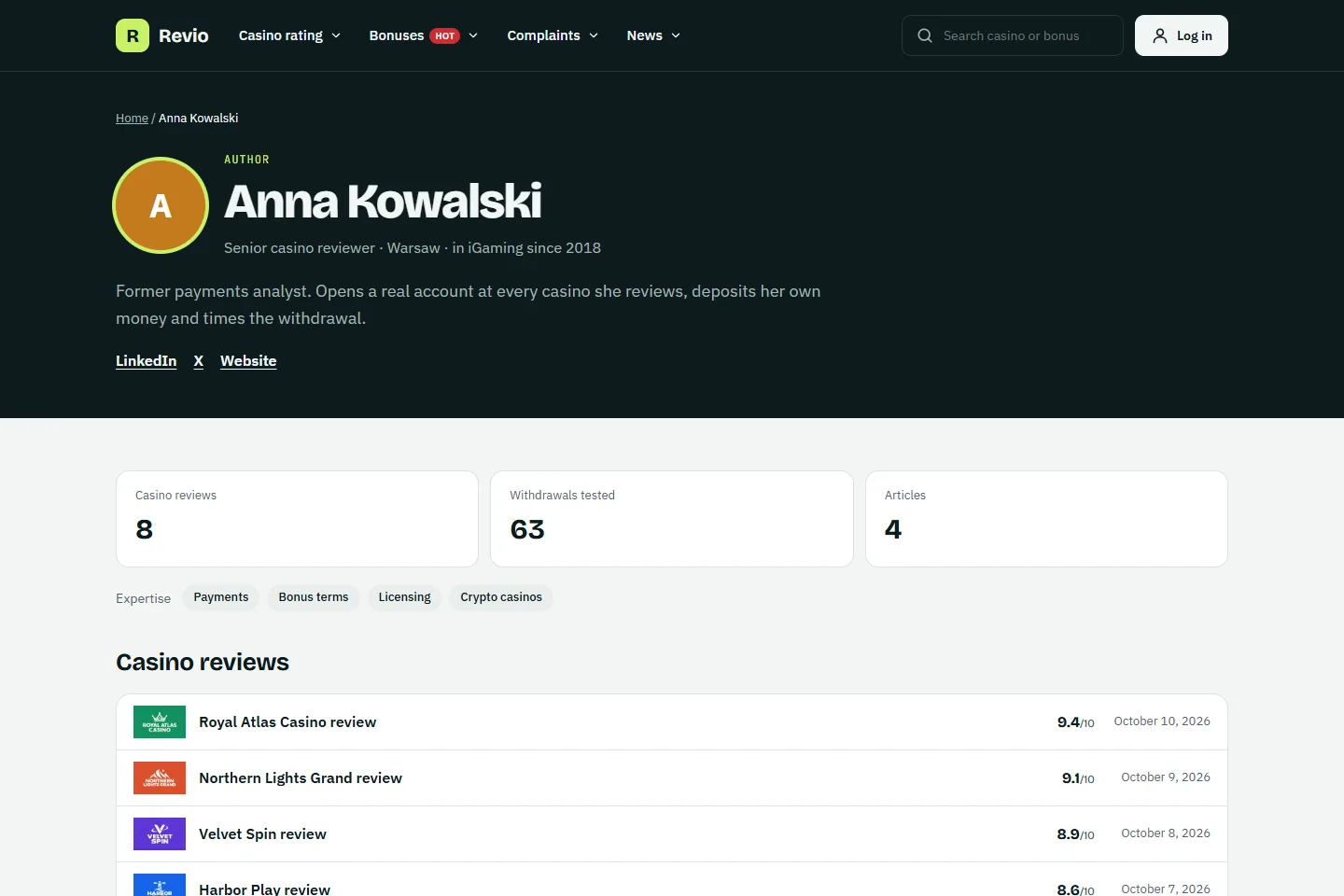
On the author page /author/name/: the profile, the numbers, the areas of expertise, the casino reviews and the articles of the author.
The review history
Each review keeps a history of checks: a date and what was checked, one row per check. “Re-tested withdrawal, payout in 2 hours”, “Updated the welcome bonus terms”. The newest date becomes “Updated” under the title and the modified date in the markup. Readers see that the review is alive, and you see which reviews are due for a re-check.
Set up in the profile
Authors fill their own profile: photo, job title, city, the year they started in the industry, expertise, the number of tested withdrawals and links to LinkedIn, X, Facebook, Instagram or email. In each review you pick the author and the fact-checker; leave the author empty and the post author is used.
In the structured data
The review markup takes the author from these fields: name, job title, photo and profile links. The newest check date goes in as the modified date. Search engines get the same information as readers, in the format they read.